I had a conversation last week about CGI with Dustin Verzal, Sift’s Senior Director of Data Engineering, and it really reframed how I think about how we’re all thinking about AI right now…
Bad CGI is so memorable and good CGI is so forgettable.
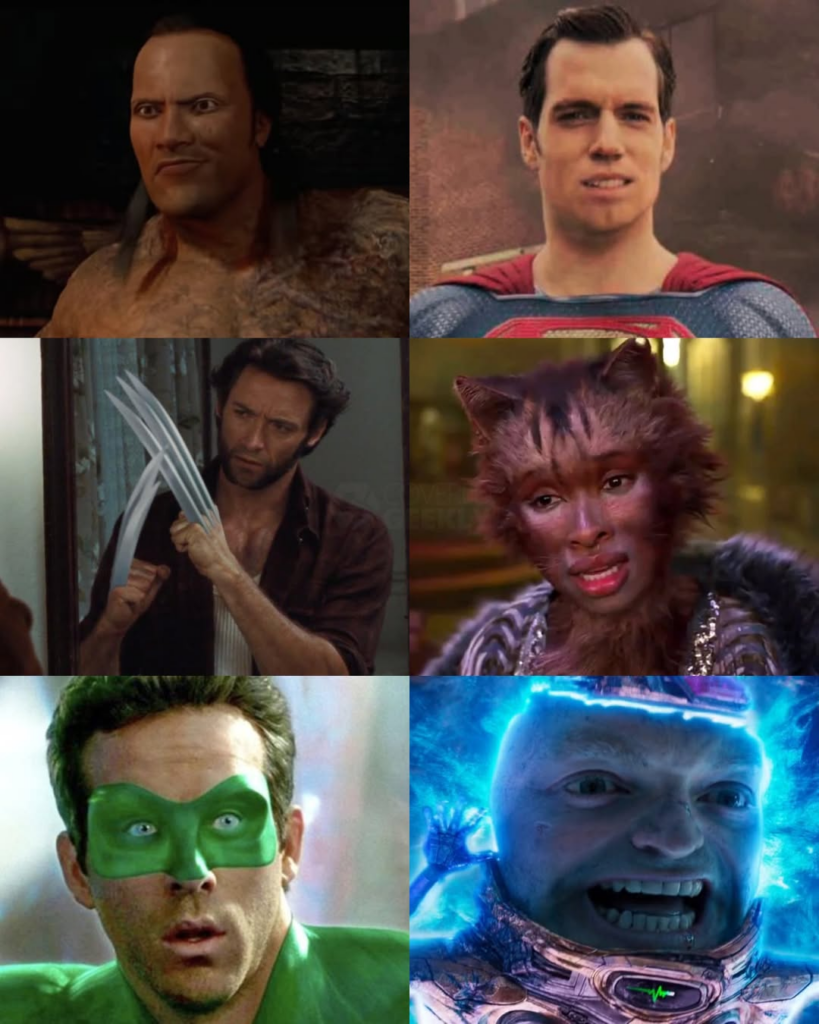
In any movie, when a CGI effect is obvious or just done poorly, you feel an instant, natural aversion. We all know bad CGI when we see it, you don’t need to be told it’s fake. It’s things like a digitally erased mustache that ruins a face, a weightless explosion or a de-aged actor whose face is smooth but whose body still moves like it’s 60+. Good CGI does the opposite. You don’t catch it, and you probably don’t think about it at all because you were watching the movie instead.
Dustin’s point was that the best visual effects work disappears. The film industry has data on this. Even “The Social Network” contained ~1,000 effects shots, more than “Godzilla,” yet most viewers couldn’t pick out any of them. “F1” included ~2,500 visual effects shots, with rain sequences shot in clear weather and the skies, ground, and tire spray added later. You just watched a racing movie (but IMO, the acting might have been the real detractor there).
The same logic should govern how AI shows up in the work most of us have started applying to our work, even within a health system’s revenue cycle.
Why AI in revenue cycle keeps announcing itself
The market right now is full of AI that wants you to know it’s AI. It’s everywhere (not just in healthcare). Think the support chatbot that makes you describe your problem twice before you lose your mind and demand a human, or the sparkle icon that appeared on software that worked fine last year. Its AI is asking for credit, just like bad CGI catches your attention. We’re currently in a landscape where companies are shipping new features so the product can say it has AI, not because AI is actually meaningful value-add.
What invisible looks like in practice
A better standard isn’t skipping the AI upgrade. It’s AI you don’t even notice because it just does a good job.
- It removes steps instead of adding a tab. If a person still has to log into a separate tool, interpret a score, and decide what to do, the AI hasn’t disappeared. It’s just moved the work around. Invisible AI means a denial that would have been worked late is worked early, or not generated at all, and nobody had to consult a model to make that happen.
- It earns trust by being right. The best CGI effects are so organic you just take them in as part of the storytelling. The revenue cycle version is a prediction that’s accurate often enough that your team stops second-guessing it and starts acting on it. Trust is the threshold where AI goes from visible to invisible.
- It fails gracefully and visibly when it should. In movies, audiences don’t see the 90% of effects work that’s done well. But they definitely notice the 10% that is done poorly. You want the same asymmetry in revenue cycle AI, but with one addition, transparency. When a model is uncertain, it should say so, alerting the human-in-the-loop. AI should be invisible in the routine, but transparent at the edge.
The comparison Dustin made between AI and CGI stuck with me because it inverts the usual sales pitch and goes against all the clamoring to shout “Now with AI.” The goal of good AI (in this case, in the revenue cycle) isn’t (just) to be impressive. It’s to be so good that it’s unremarkable.